Research / Liquid–gas interfaces
Liquid–gas interfaces
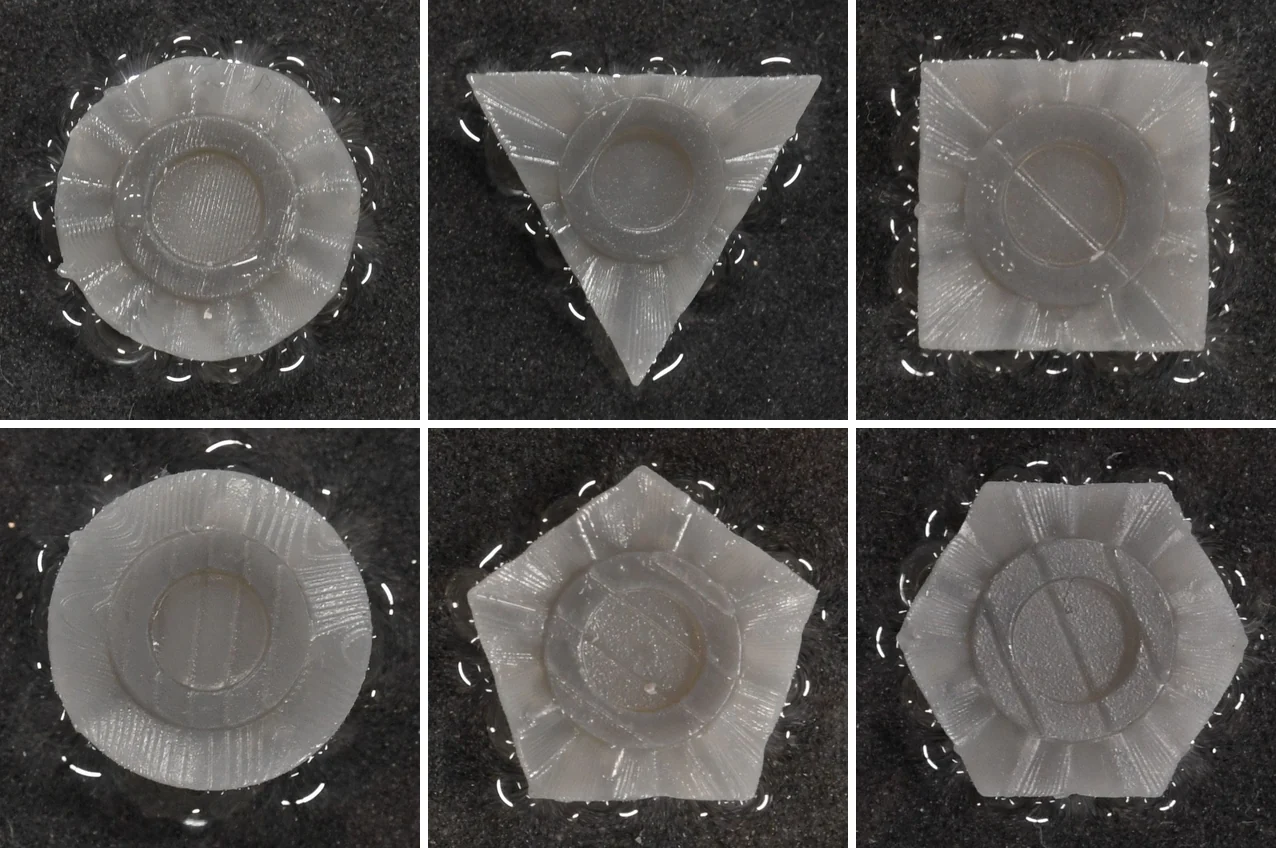
Floating particles deform the liquid–gas interface, which drives capillary attraction and aggregation, the so-called Cheerios effect. The deformation depends strongly on particle shape.
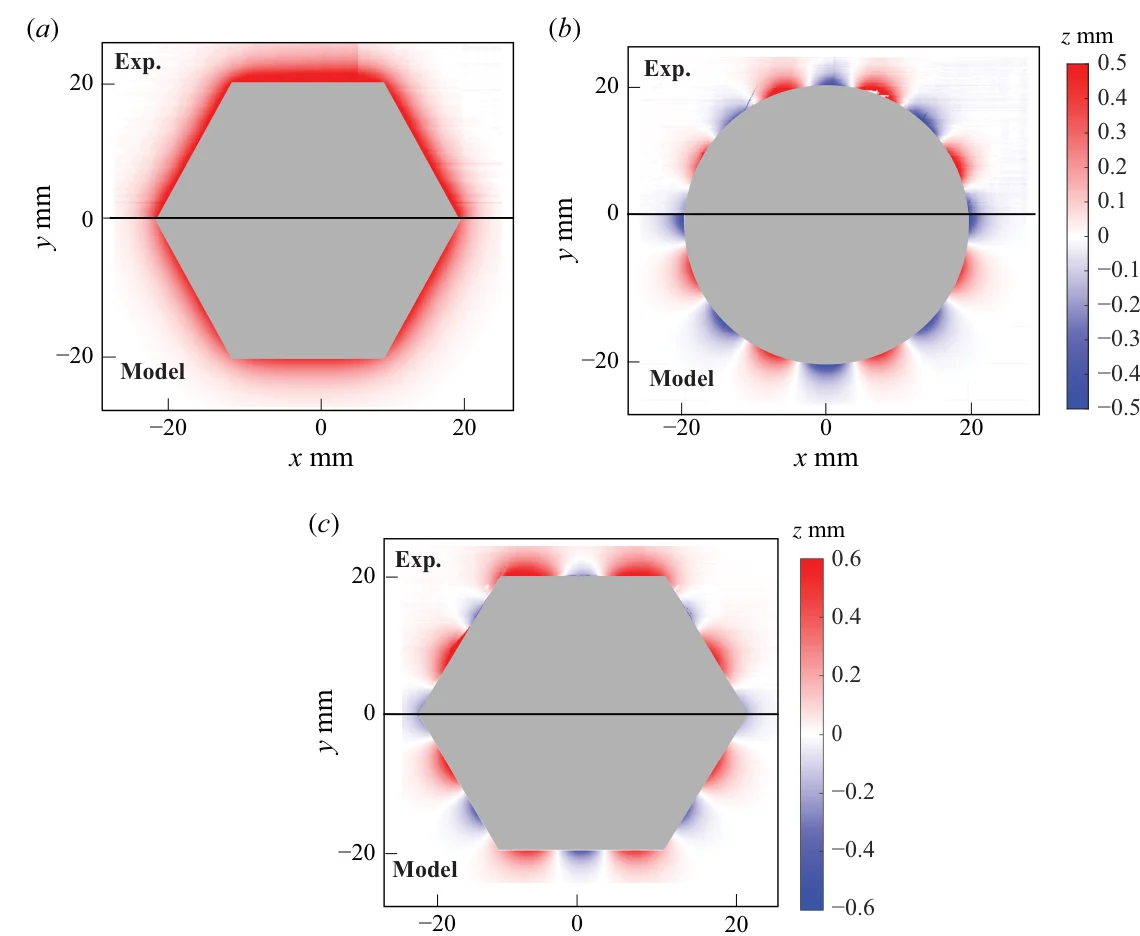
With collaborators, we derived a closed-form solution, based on domain perturbations, for the interface around particles of complex, anisotropic shape, including a pinned contact line of varying height.
To test it, I built a fluorescence-based laser-sheet scanning system with stereo imaging that maps the interface with 0.1 mm precision. Measurements around 3D-printed circular, polygonal and undulated particles agree with the model.