Research / Single-camera 3D PIV
Single-camera 3D PIV
Most 3D PIV needs several cameras, and single-camera methods break down at high seeding density because particle images overlap. Many real experiments have room for only one camera.
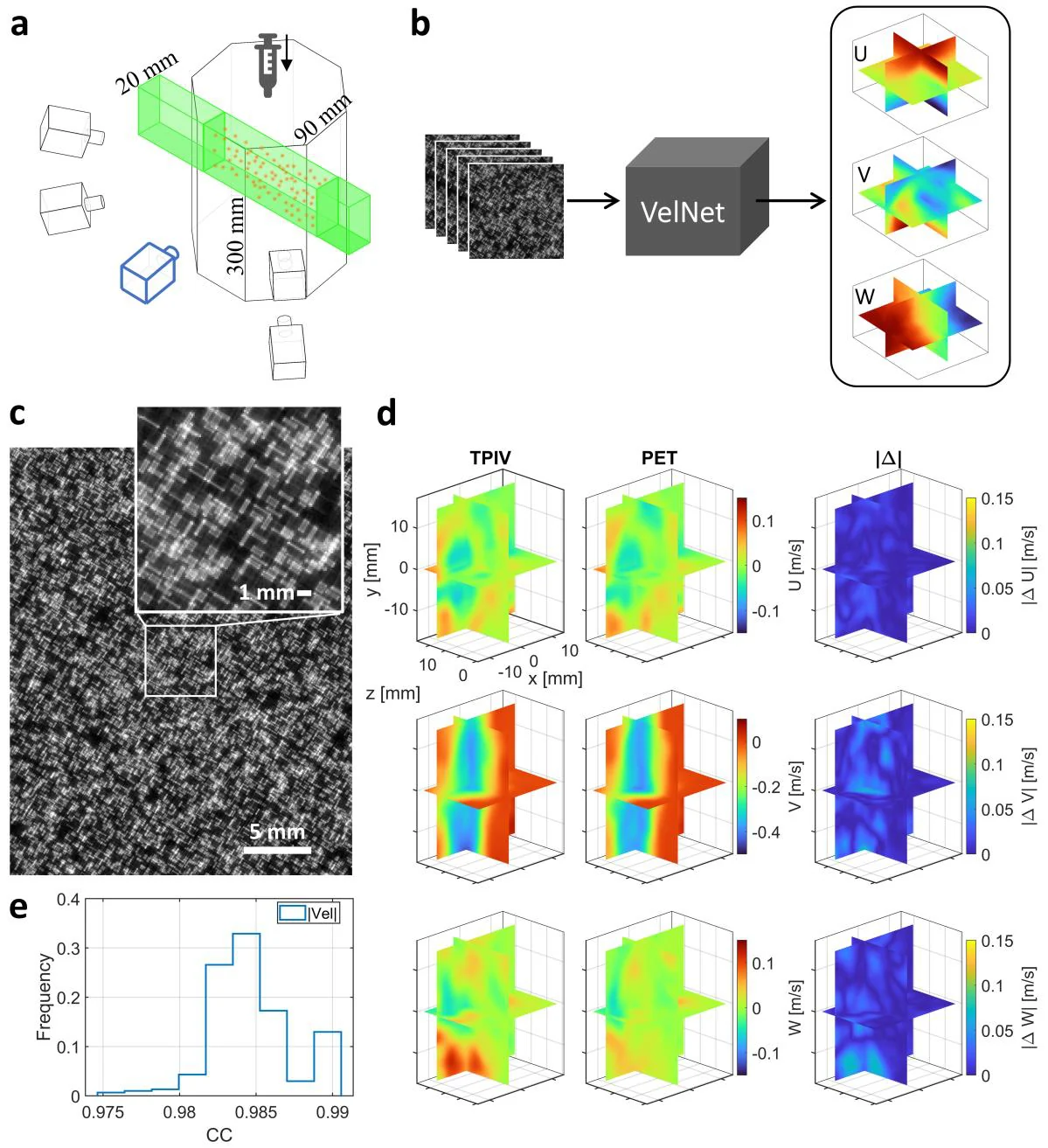
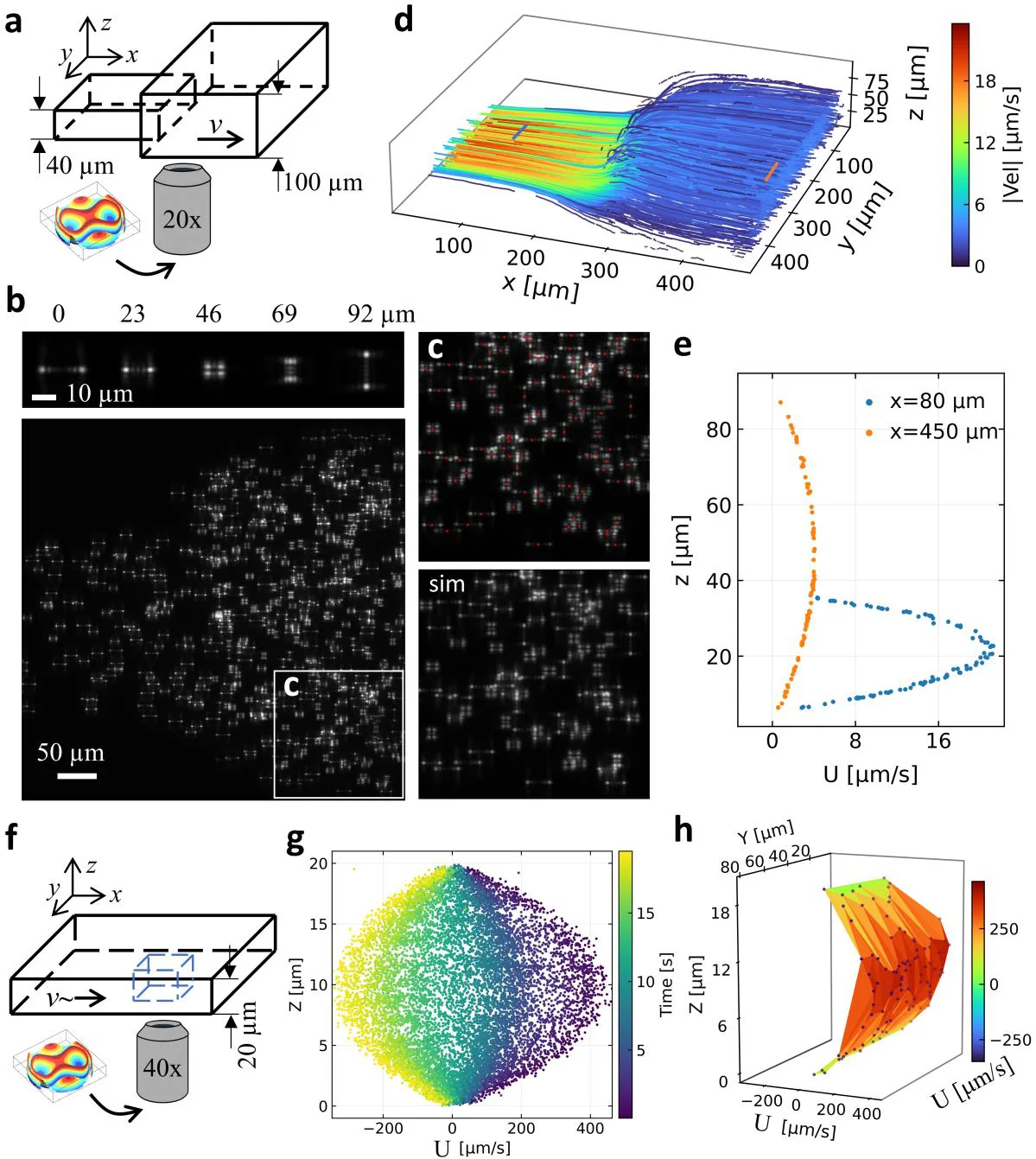
PET-PIV, developed with Dafei Xiao in Prof. Yoav Shechtman’s group, adds one thin phase mask to an otherwise standard PIV setup and calibrates the imaging system in place. Deep-learning algorithms then either track individual particles or, at very high density, reconstruct the 3D velocity field directly from short sequences of 2D images.
My part was the five-camera system that combines tomographic and PSF-engineered imaging, which gave the tomographic PIV reference for validation. Against it, PET-PIV reached correlation coefficients above 0.97 and ran an order of magnitude faster, at seeding densities that previously needed several cameras.