Research / Shock-driven flows
Shock-driven flows
When a shock wave passes an abrupt area expansion, it decelerates, curves and reflects into a highly transient pattern. How does it recover into a uniform shock far downstream?
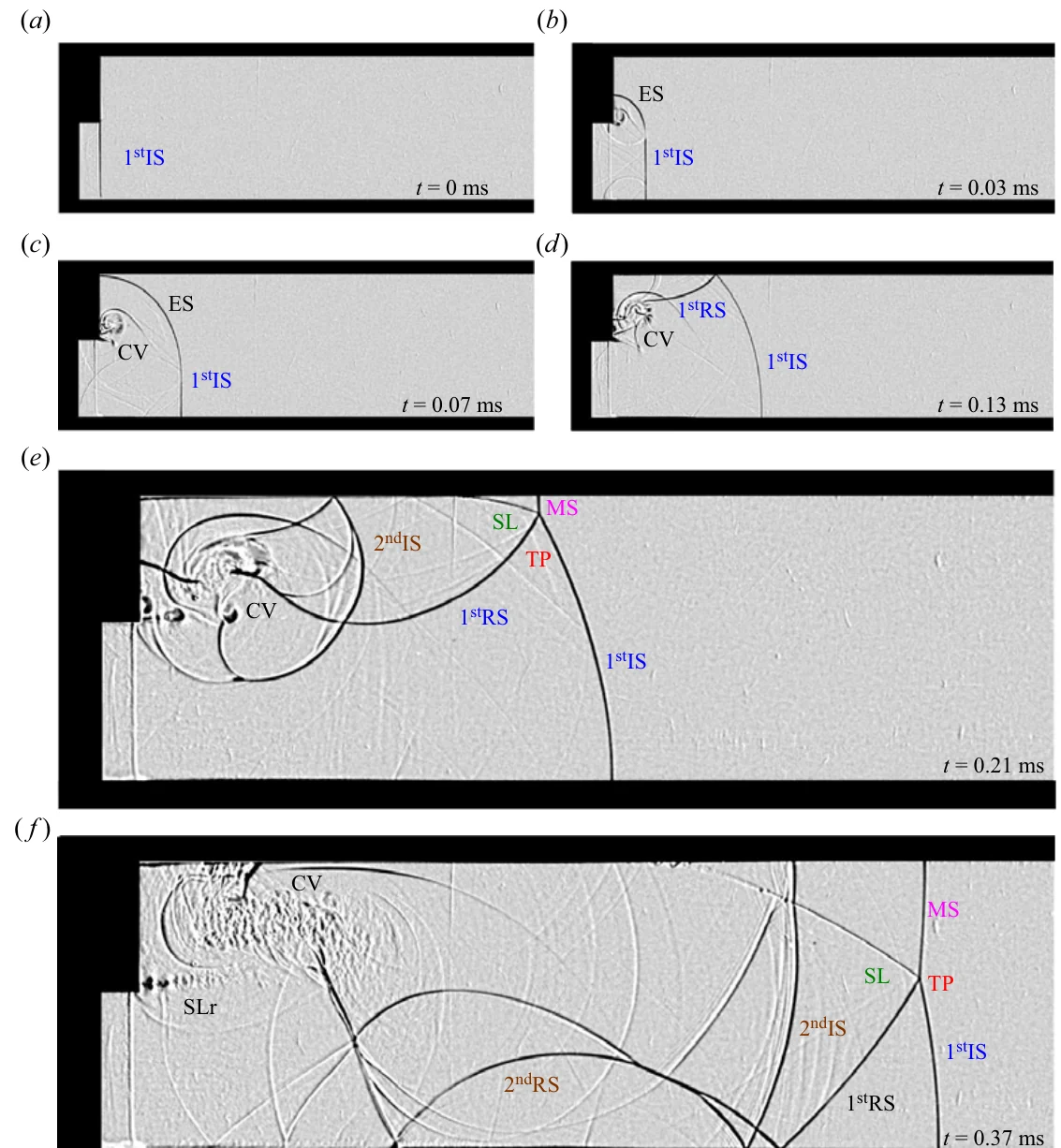
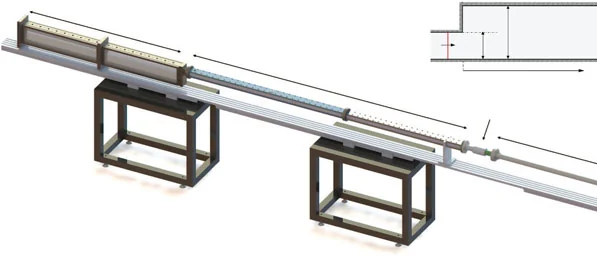
Using the shock tube I designed and built at the Technion, together with large eddy simulations and geometrical shock dynamics, we followed normal shock waves of Mach 1.1 to 1.8 through expansions with area ratios up to 5.
As the shock enters the larger section it decelerates and its front becomes non-uniform. Reflections from the walls create a complex pattern near the expansion. Further downstream, a laterally moving shock that meets the front at a triple point reverberates between the walls, and this process evens out the flow behind the incident shock.